How to Screen Resumes Faster and More Consistently
Faster resume screening comes from better preparation: define the role, use a short rubric, batch similar work, record a reason, and reserve time for uncertain cases.
1. Define the screen before opening resumes
Write three to five criteria that are genuinely relevant to the work. Decide what evidence would count and what you will do when the resume does not answer the question.
This prevents the first few resumes from changing the standard for everyone who comes later.
2. Review in consistent passes
Batching reduces context switching and makes comparisons easier.
- Pass one: confirm basic role, location, work authorization, or other stated requirements.
- Pass two: look for evidence against the role rubric.
- Pass three: identify an interview question or missing detail.
- Record a short reason for advancing, holding, or closing.
3. Use AI to summarize, not decide
AI resume screening can extract evidence and surface likely matches, especially when application volume is high. Reviewers should still inspect the source information, consider equivalent experience, and correct errors.
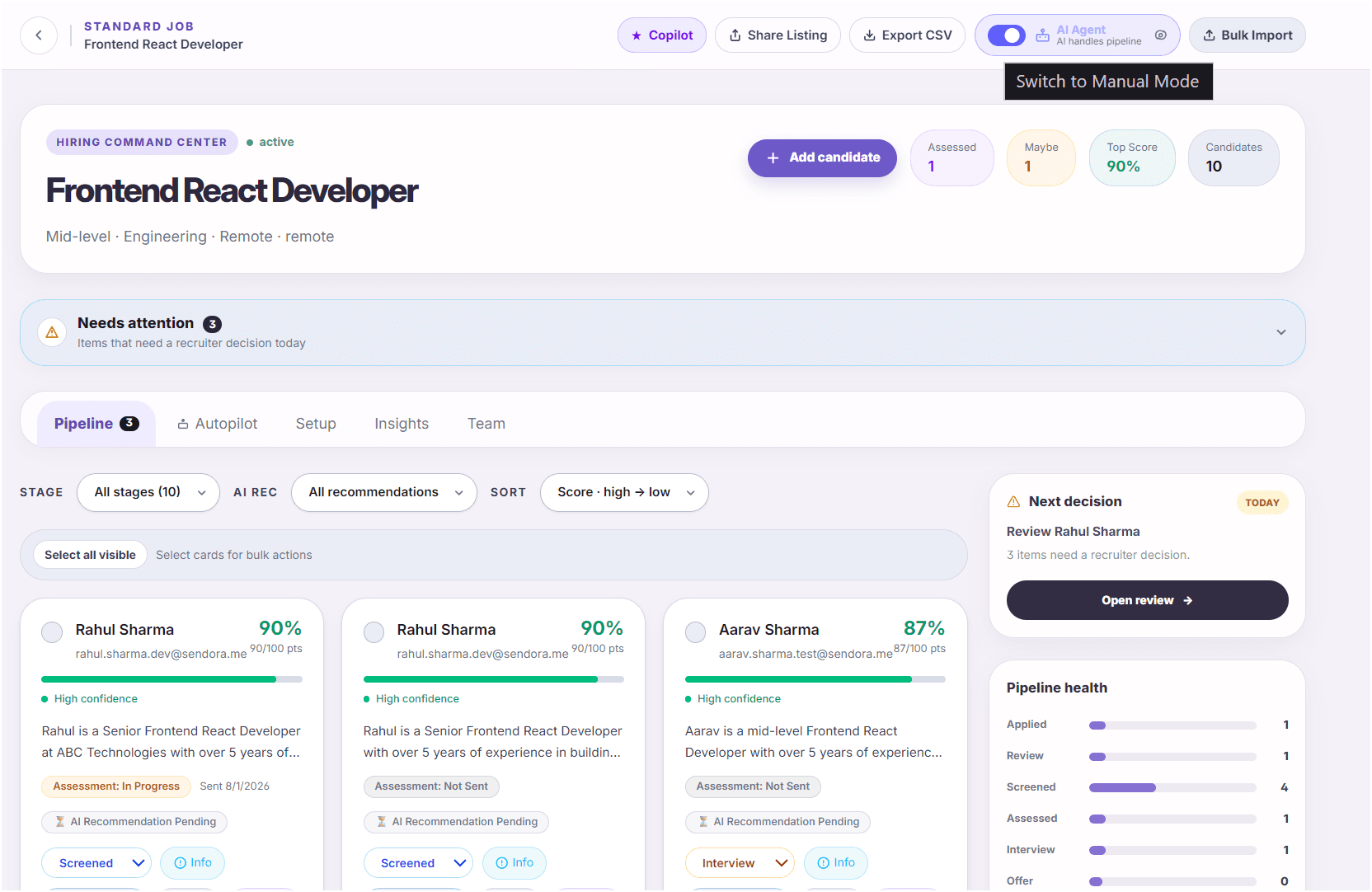
A structured pipeline makes the process easier to audit because the stage decision, rationale, and next action stay with the candidate record.
Practical example
Five-minute screen checklist
For every resume, answer the same questions:
- ✓What evidence matches the top two role outcomes?
- ✓What is unclear or missing?
- ✓What is the next fair way to learn more?
Frequently asked questions
How long should a resume screen take?
It depends on the role and volume. A consistent first pass often takes only a few minutes when criteria are defined, while uncertain applications deserve a deeper review.
What should I look for first on a resume?
Start with evidence related to the role’s most important outcomes and required skills rather than scanning for prestigious names or a particular career path.
Can AI help screen a large number of resumes?
Yes, AI can summarize and prioritize resumes, but teams should review the evidence, monitor errors, and keep the final decision with people.
Next step
Review candidates with Rolebolt
See a structured AI-assisted candidate review workflow.
Review candidates with Rolebolt