Applicant Tracking System: What to Look For in 2026
An applicant tracking system should be the reliable source of truth for a role: who applied, what evidence they shared, what happens next, and who owns the next action.
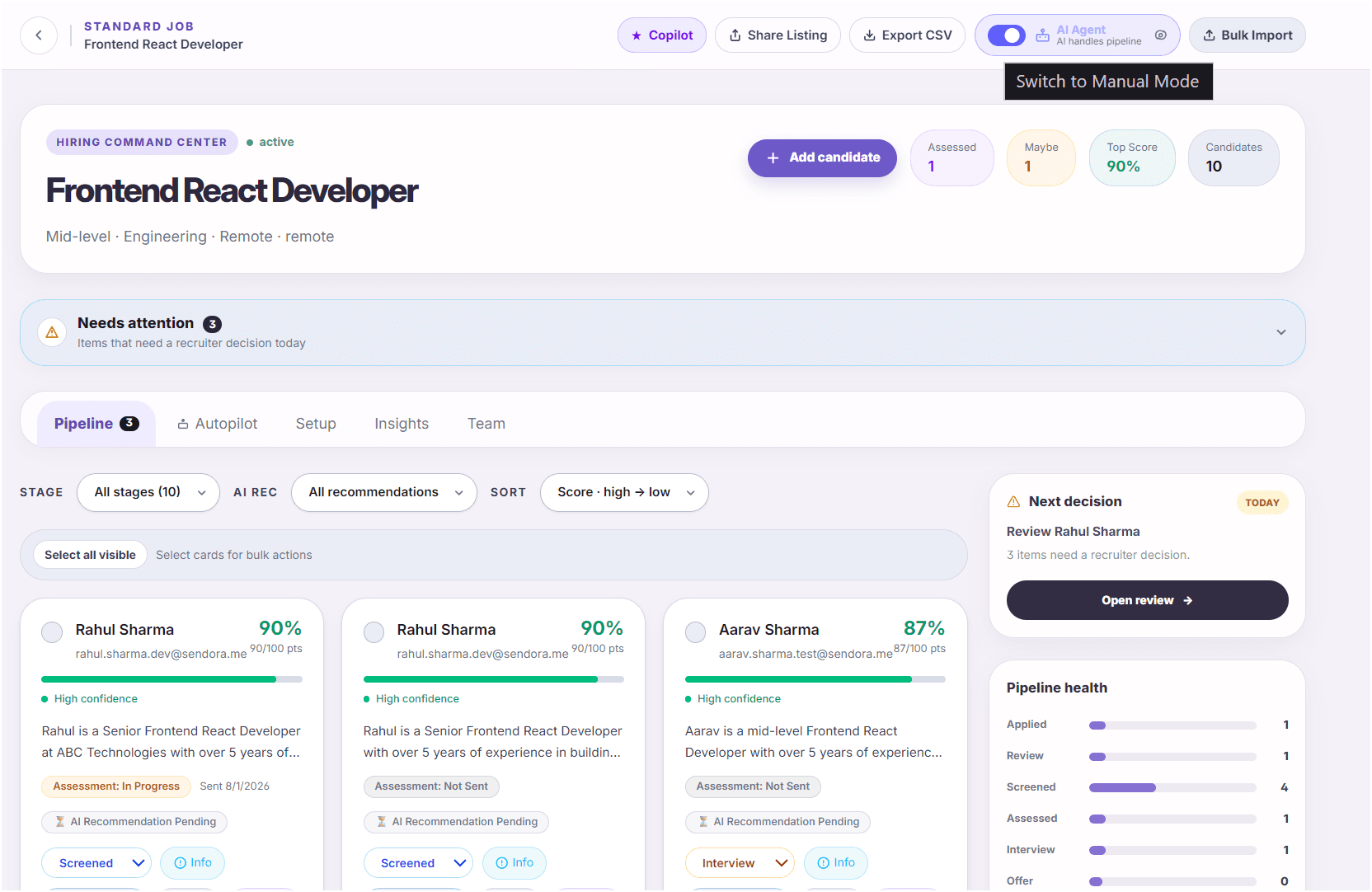
The job of an ATS
An applicant tracking system is more than a list of resumes. It connects a job description, applications, candidate evidence, stage history, interviewer feedback, and communication. When those pieces live in separate spreadsheets and inboxes, candidates get inconsistent updates and hiring managers lose context.
A good ATS gives every role a visible workflow while keeping the candidate record understandable. The right level of structure depends on the hiring volume and the complexity of the role.
Core features worth comparing
Use a simple scorecard when comparing ATS products. A feature matters when it removes a real failure point in your current process.
- Role and rubric setup before candidate review.
- Application intake with resume and profile data in one record.
- Custom stages, bulk actions, notes, reminders, and candidate communication.
- Structured assessments and interviewer collaboration.
- Reports for time in stage, source quality, and pipeline health.
- Data export, deletion controls, access boundaries, and audit history.
Choosing between a lightweight and full ATS workflow
A small business may only need a structured application form and a clear review queue for occasional hiring. A growing team may need a full pipeline, role-specific scoring, assessments, permissions, and analytics.
Choose the lightest workflow that keeps decisions consistent. A complex ATS that nobody updates creates less visibility than a simple system the team uses every day.
Practical example
ATS scorecard for a 10-person hiring team
Before selecting a system, ask the team to complete the same five-minute exercise:
- ✓Create a role with two must-have criteria.
- ✓Move a sample candidate through three stages.
- ✓Find the next owner and explain why the candidate is in that stage.
Frequently asked questions
What does ATS stand for?
ATS stands for applicant tracking system. It organizes job applications, candidate records, stages, feedback, and hiring actions.
Do startups need an applicant tracking system?
A startup can benefit from an ATS as soon as multiple people review candidates or more than a few roles are active. The workflow can start lightweight and become more structured as volume grows.
What makes an ATS easy to use?
Clear role setup, fast candidate review, visible next actions, useful defaults, and low-friction updates usually matter more than a long feature list.
Next step
See the Rolebolt ATS workflow
Explore candidate pipelines, assessments, analytics, and role setup.
See the Rolebolt ATS workflow