Recruiting Pipeline Management: A Clearer Hiring Process
A healthy recruiting pipeline shows what stage each candidate is in, what evidence is available, who owns the next action, and where the process is slowing down.
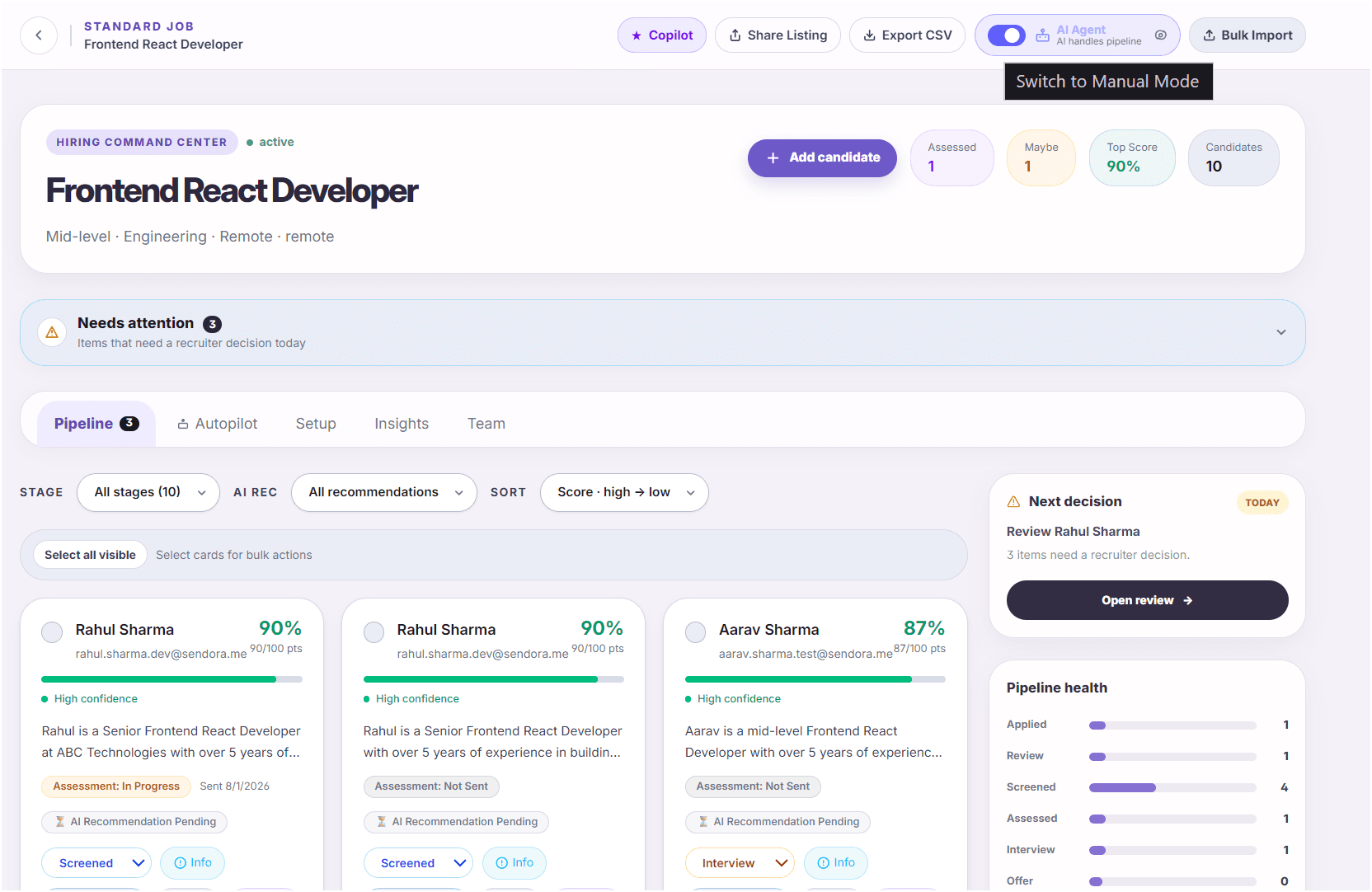
Start with stages that describe decisions
Stages should tell the team what has happened and what must happen next. “Maybe” and “Follow up” are hard to manage because they hide the decision or action underneath.
A simple pipeline might include New application, Recruiter review, Interview, Assessment, Offer, and Closed. Adjust it to the role, but keep stage definitions written down.
Make ownership visible
Every active candidate should have a next action and an owner. This is more valuable than adding another automation rule.
- Set a realistic target time for each stage.
- Record the reason for a stage change.
- Use reminders for candidate-facing commitments.
- Review stale candidates separately from active decisions.
- Give interviewers structured prompts and a clear return path.
Measure flow, not vanity
Count the time candidates spend in each stage, the conversion between stages, the source quality, and the reasons searches close. A large top-of-funnel number does not help if the team cannot review candidates fairly.
Rolebolt’s pipeline and analytics surfaces are designed to keep stage decisions, candidate context, and next actions in one recruiting workspace.
Practical example
Weekly pipeline review
A 20-minute review can ask four questions:
- ✓Which candidates need a response today?
- ✓Which stage has the oldest candidates?
- ✓Which decisions are blocked by missing evidence?
- ✓Which role criteria need clarification?
Frequently asked questions
How many stages should a recruiting pipeline have?
Use enough stages to represent meaningful decisions and ownership, but not so many that people stop updating them. Many teams can begin with four to seven clear stages.
What is a stale candidate?
A stale candidate is someone who has remained in a stage longer than the team’s agreed service level without a recorded next action or update.
Can a recruiting pipeline be automated?
Some reminders, routing, and stage actions can be automated. Candidate-impacting decisions should have clear criteria, visibility, and human oversight.
Next step
See the Rolebolt pipeline
Explore stage review, candidate actions, and pipeline health.
See the Rolebolt pipeline